
Mutual Fund Risk Factors
Contents
No guaranteed returns
Mutual Fund Schemes are not guaranteed or assured return products.
AMFI, "Risks in Mutual Funds"
A fund's return depends on the prices of what it holds, and those prices change every day. Bank deposits are insured up to ₹5 lakh per depositor per bank by DICGC. Mutual fund units have no such insurance.
Past performance does not guarantee future performance of any Mutual Fund Scheme
AMFI, "Risks in Mutual Funds"
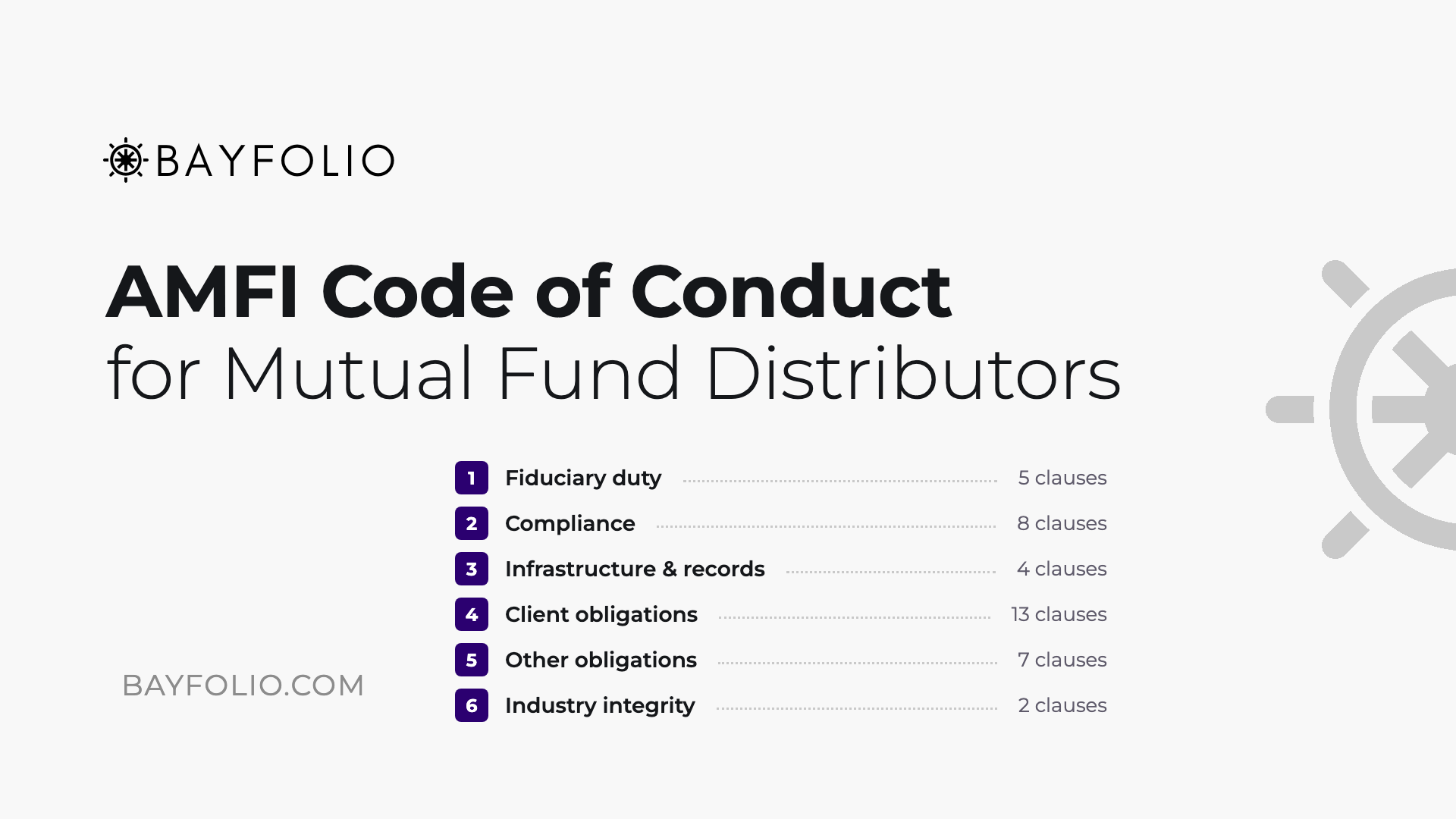
If anyone promises you a fixed return from a mutual fund, walk away. The AMFI Code of Conduct bars distributors from doing it.
The main risks
1Market risk
Share and bond prices move every day, and so does your fund. In a bad year an equity fund can fall a long way.
2Credit risk
A borrower may not repay a debt fund on time, or at all. The fund's value then falls.
3Interest rate risk
When interest rates rise, bond prices fall. Long-duration and gilt funds move the most.
4Liquidity risk
In a stressed market a fund may not sell some holdings at a fair price. In rare cases it can limit redemptions.
5Concentration risk
A fund that bets on a few companies, one sector or one theme rises and falls with them.
6Reinvestment risk
When a bond pays out, the fund must reinvest the money. If rates have fallen, it earns less.
7Currency and overseas risk
International and GIFT City funds hold assets in other currencies. A stronger rupee lowers your return in rupees.
8Inflation risk
If a fund earns less than inflation, your money buys less each year, even if it never falls.
9Regulatory and tax change risk
Rules and tax can change after you invest. For example, debt fund units bought on or after 1 April 2023 are taxed at your slab rate, however long you hold them.
The riskometer
- Low
- Low to Moderate
- Moderate
- Moderately High
- High
- Very High
Levels: SEBI Master Circular for Mutual Funds, 20 March 2026, para 6.16.1(d). Colours softened from SEBI's scheme for this page.
The fund house checks the level every month and tells you by email or SMS if it changes. The riskometer does not say whether the fund suits your goal. A "Low" fund can still lose money.
The PRC grid for debt funds
Rows show interest rate risk. Columns show credit risk. The fund may take less risk than its cell, never more.
| Interest rate risk ↓ / Credit risk → | Relatively low (A) | Moderate (B) | Relatively high (C) |
|---|---|---|---|
| Relatively low (I) | A-I | B-I | C-I |
| Moderate (II) | A-II | B-II | C-II |
| Relatively high (III) | A-III | B-III | C-III |
A-I is the safest cell. C-III takes the most risk. You find a fund's cell in its factsheet and scheme documents.
BayFolio as your distributor
- BayFolio LLP is an AMFI-registered Mutual Fund Distributor, ARN-363035. Check our ARN on AMFI's website.
- We are not a SEBI-registered investment adviser. We give incidental advice on mutual fund products only, and only to our mutual fund distribution clients.
- We do not give tax or legal advice. Please ask a tax adviser or a lawyer.
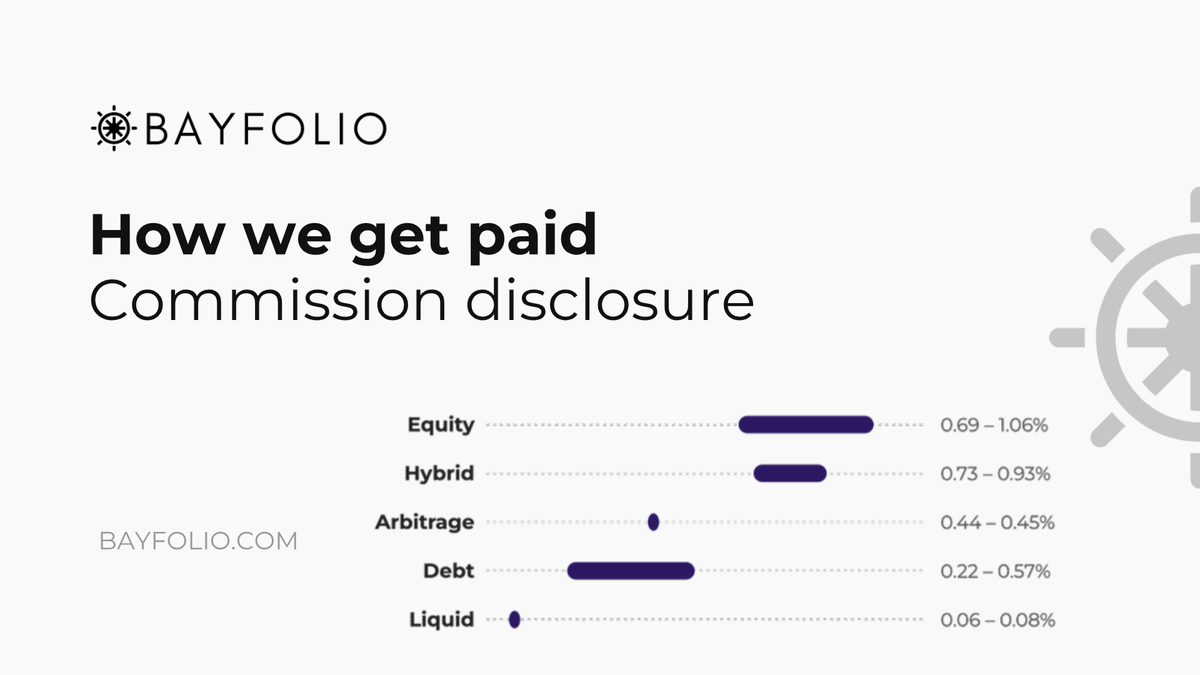
- We check your risk profile before you invest. We offer regular plans and show our commission first.
- Your money goes from your bank straight to the fund house, in your name. We never hold it.
- Disputes about our distribution activity do not have access to the exchange's investor redressal forum or arbitration mechanism.
- We follow the AMFI Code of Conduct for Mutual Fund Distributors.
Read next
 BayFolio LLP
 BayFolio LLP
 BayFolio LLP
 BayFolio LLP

 BayFolio LLP

 BayFolio LLP
 BayFolio LLP

Questions
Can I lose money in a mutual fund?
Yes. Mutual funds carry market risk. The value of your units goes up and down with the prices of what the fund holds, and you can get back less than you put in. This is true of equity funds and also of debt funds.
Are mutual fund returns guaranteed?
No. AMFI says mutual fund schemes are not guaranteed or assured return products. Unlike a bank deposit, mutual fund units have no deposit insurance. Anyone who promises you a fixed or assured return from a mutual fund is breaking the rules.
What does the riskometer show?
The riskometer is a SEBI-mandated meter on every mutual fund scheme. It shows the risk of the scheme's portfolio on six levels: Low, Low to Moderate, Moderate, Moderately High, High and Very High. The fund house reviews it every month. It does not show whether the fund suits you.
What is the Potential Risk Class (PRC) of a debt fund?
The PRC is a 3 by 3 grid that every debt fund must sit in. One side is interest rate risk, measured by Macaulay duration. The other side is credit risk, measured by a credit risk value. The cell shows the most risk the fund may take, not what it holds today.
Is a debt fund or a liquid fund risk-free?
No. Debt funds carry interest rate risk, credit risk and liquidity risk. A borrower can default, and bond prices fall when interest rates rise. Liquid and overnight funds carry less of these risks, but not zero.
Is BayFolio a SEBI-registered investment adviser?
No. BayFolio LLP (ARN-363035) is an AMFI-registered Mutual Fund Distributor. It is not a SEBI-registered investment adviser. It gives incidental advice on mutual fund products only, and only to its mutual fund distribution clients.
Does BayFolio give tax or legal advice?
No. BayFolio does not give tax or legal advice. Please ask a tax adviser or a lawyer about your own situation.
Sources. SEBI (Mutual Funds) Regulations, 2026, as amended to 10 October 2026, Fifth Schedule (standard warning; from 8 April 2027 it moves to Chapter IIID of the SEBI (Intermediaries) Regulations, 2008). SEBI Master Circular for Mutual Funds, 20 March 2026, paras 6.16–6.18 and the Investor Charter. AMFI, "Risks in Mutual Funds". DICGC, "A Guide to Deposit Insurance". All checked on 10 November 2026.
Last updated: 10 November 2026
Member discussion